

You notice a musty smell when you walk into a room. You inspect the walls, ceilings, and floors, but nothing looks wrong. No obvious mold. No visible leak. The odor, however, keeps coming back.
A musty smell in your house with no visible mold can be frustrating because there is no clear place to start. While microbial growth is one possible explanation, an earthy or stale odor alone cannot establish that mold is present. Hidden dampness, HVAC conditions, old water damage, and other odor sources can produce similar complaints.
Here is how to narrow down the possibilities, identify clues worth documenting, and decide when a professional mold inspection and assessment may help.
Why Can a House Smell Musty Without Visible Mold?
Water does not always stay where a leak begins. It can move through drywall, insulation, wall cavities, flooring layers, and other porous materials. By the time you notice an odor, the surface you can see may be dry even if moisture persists elsewhere.
Florida’s humid climate adds another variable. Warm, moisture-laden air can condense on cooler surfaces, particularly near air-conditioning equipment, poorly insulated areas, or unconditioned spaces. A musty odor can also come from damp contents or an HVAC system, not necessarily from growth behind your walls.
What the smell can and cannot tell you
A persistent musty odor is a reason to investigate moisture and building conditions. It is not, by itself, proof that mold is present, that a particular type of mold is involved, or that walls need to be opened.
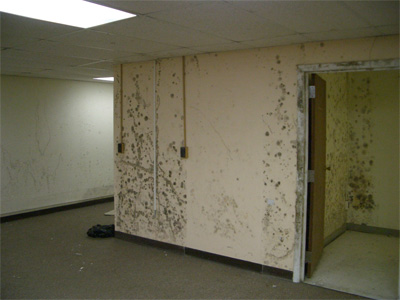
01Concealed Moisture Behind Drywall or Under Flooring
A small plumbing leak, an older roof leak, or water entering around a window can leave damp materials out of view. Paint and drywall surfaces may look normal even when affected materials are deeper in the assembly.
Watch for bubbling paint, softened baseboards, swollen trim, warped floor edges, recurring stains, or an odor that seems strongest near one wall or closet. These are clues, not a diagnosis. If the source remains unclear, a professional moisture evaluation can help document where elevated moisture is detected in accessible building materials.
02Air Conditioning, Condensation, and Ductwork
If the odor becomes noticeable when the AC runs, check whether it seems strongest near the air handler, return grille, or specific supply vents. Blocked condensate drains, wet insulation, dirty components, and humidity problems may all be relevant.
Do not assume that a smell from a vent proves mold is growing in the ductwork. The odor may be drawn into the return system from somewhere else in the building. An HVAC technician can assess equipment operation and drainage; an indoor environmental assessment may be appropriate if a moisture or microbial concern remains unresolved.
03An Older Leak That Never Fully Dried
Water from an appliance overflow, leaking pipe, or earlier storm may have been wiped up while moisture remained in padding, insulation, cabinets, or wall assemblies. The room may appear repaired, yet the odor returns during humid weather or after the AC has been off.
The Centers for Disease Control and Prevention emphasizes that controlling moisture is central to preventing mold problems. For wet materials, prompt drying and correcting the water source are more important than masking the smell.
04High Indoor Humidity and Poor Airflow
A room that stays closed, a humid garage converted into living space, or a closet on an exterior wall may develop persistent damp conditions without a single obvious leak. Look for condensation on windows, persistent clamminess, or a humidity reading that stays high over time.
A clean, functioning HVAC system, appropriate ventilation, and controlling sources of water are important first steps. A dehumidifier can help manage indoor humidity, but it will not fix a leaking pipe or water entering through the building envelope.
05Damp Contents and Other Odor Sources
Carpeting, upholstered furniture, cardboard boxes, stored clothing, drains, and household contents can hold moisture or odors. Before assuming there is a concealed building defect, note whether the smell changes after moving items or checking nearby drains and stored materials.
If the odor persists after straightforward sources have been ruled out, especially with a history of water intrusion, a building-focused assessment becomes more useful.
Where to Look When the Smell Has No Obvious Source
- Under sinks and around appliances: Check for slow leaks, swelling, or repeated dampness.
- At baseboards and flooring edges: Look for lifted finishes, stains, or soft spots.
- Near windows and exterior walls: Watch for moisture following heavy rain.
- At the AC closet and condensate line: Check for standing water or drainage issues.
- Inside closets and behind stored items: Note stale odors and condensation in areas with limited airflow.
- Near previously repaired areas: Record whether the smell coincides with an earlier leak.
Do not cut into drywall or disturb materials that may be contaminated simply to locate the smell. When widespread or concealed growth is suspected, a qualified assessment can help determine whether opening the assembly is warranted and how to do so safely.

Find the moisture source before treating the symptom.
Deodorizers, scented products, and fresh paint may conceal an odor for a while, but they do not correct wet building materials or an ongoing moisture source.
Do You Need Mold Testing or a Moisture Inspection?
Not every musty odor calls for laboratory mold testing. The right approach depends on the building history, whether there has been water damage, what can be observed, and what question needs to be answered. The NIOSH guidance on mold testing and remediation notes the limitations of routine air sampling and underscores the value of investigating dampness and visible conditions.
Consider a professional evaluation when:
- The odor persists or returns despite addressing obvious humidity or housekeeping issues.
- There was a known leak, plumbing event, or other water intrusion.
- You find recurring staining, soft materials, or elevated moisture readings.
- The smell is concentrated near an inaccessible wall, floor, or HVAC area.
- You need independent documentation before planning remediation or repairs.
Unexplained Musty Odor in Your Home?
Everest can review the history of the concern and help determine whether an independent mold or moisture assessment is appropriate.
What Happens During an Independent Assessment?
Everest’s mold inspection and assessment service begins with the property’s history and observed conditions. Depending on the scope, a licensed assessor may evaluate visible staining and suspect areas, use moisture meters to map affected materials, examine HVAC-related conditions, and collect samples when the findings call for laboratory analysis.
The purpose is to identify and document the conditions present, including suspected moisture pathways, so the property owner and qualified remediation professionals can make informed decisions. Everest does not perform the remediation work it assesses.

Frequently Asked Questions
Can mold be present without anything visible?
Yes. Dampness and microbial growth can occur in concealed areas. However, an odor by itself does not prove hidden mold, and an investigation should consider other causes.
Will painting or spraying air freshener fix the smell?
Not if the source is ongoing moisture or damp building materials. The underlying cause needs to be identified and corrected.
Should I buy an at-home mold test?
A consumer test may not answer where moisture is coming from or what corrective work is needed. If the odor persists, building conditions and water sources usually deserve attention first.
When should I call a professional?
If the odor is persistent, associated with previous water damage, or accompanied by staining, warping, or dampness you cannot explain, an independent evaluation may help narrow the problem.
Get Answers About That Musty Smell.
Everest Building Consulting Group provides independent mold and moisture assessments to help Florida property owners understand what may be happening inside their buildings.


